ServiceNow Bets Big on Enterprise AI With Vision of Managing Everything
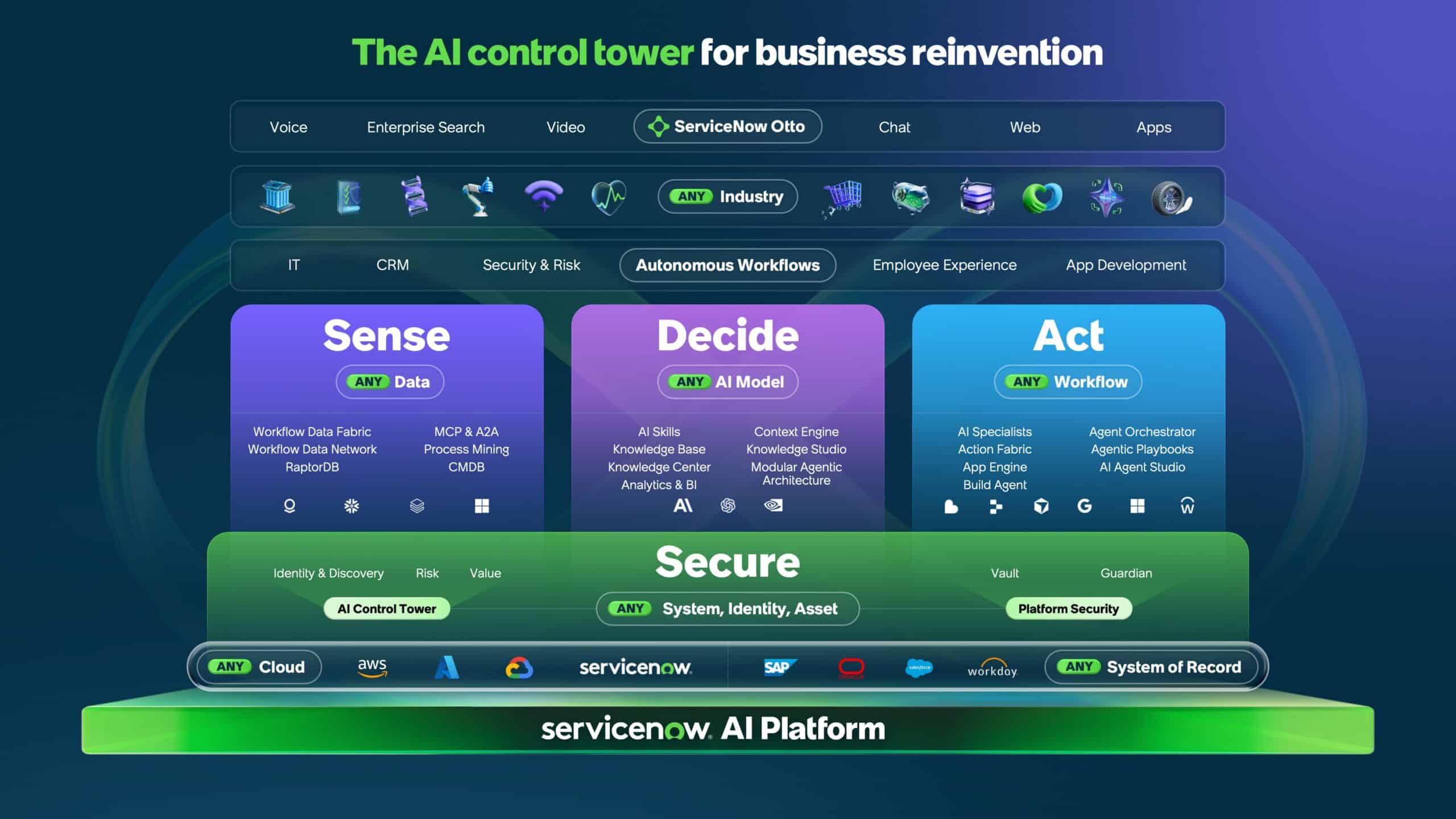
ServiceNow just unleashed a barrage of announcements that set the stage for its goal: doubling revenue to $30 billion in the next four years. In a nutshell, they want to own the management tools, security, and front door to every AI agent in your company. And they’re going to ask you to pay for it. (The SaaS Apocalypse may be over.)
I know this sounds aggressive, since both Microsoft and Workday are placing the same bet, but it does make sense, so here’s what’s going on.
ServiceNow: We are turning enterprise AI chaos into control. Workday: AI agents without enterprise governance are lawless by design.
It sounds good to CIOs I’m sure, but for most companies the problem is not “chaos” it’s “building scalable ROI use cases.” So let’s hope these control tools can inspire companies to move faster.
(Read all about our vision of Agentic HR in our upcoming AI Blueprint for HR 2030.)
One journalist calls it the “tollgate for agents,” like a highway tax for the privilege of driving your car.
 |
Let’s break it down.
Action Fabric. ServiceNow Watches And Monetizes Everything.
One of the first parts of the story is what ServiceNow calls the “Action Fabric.” It’s like a traffic cop that monitors all agent activity.
This is the same vision Microsoft has for Agent 365 and Workday introduced in the Agent System of Record – a monitoring and management layer that governs, monitors, and manages all the Agents.
Delivered as an MCP server, the company highlights the following:
Any agent. Any model. Any AI agent connects with ServiceNow Fabric (via MCP) to run: any model, any agent, regardless of who built it or sold it to you. (Microsoft and Workday say the same.)
Open to every AI. The management tools can also be called by agents. So you can automate management scenarios and plug in third party management frameworks.
Full Control; Full Trust. All Agents are authenticated, permission-scoped, audited, and monitored by ServiceNow. (I’m not clear how the Workday, SAP, or other business rules are enforced, that wasn’t clear.)
This leverages what ServiceNow has spent twenty years building: the CMDB,(configuration management database), the Workflow Data Network, configured business rules, Security Center, and identity and access controls. It’s a complete IT management system for agents and applications, which ServiceNow positions as ready for “reinvention.”
Workday and SAP are making a parallel moves from the other direction. The Agent System of Record and the Agent Gateway open Workday’s rails to external agents on a per-call basis. And SAP has also stated that Agents must use SAP’s Business Accelerator Hub to access their business rules (also metered by usage).
How do you decide which to use? It’s going to come down to issues like how much work you’ve put into your Workday or SAP business rules (likely a lot) and how well you like Sana or Joule as a development environment.
Reinventing Now Assist as Otto, making it the “Front Door” Agent to anything you need in the enterprise.
Just as Workday introduced Sana as the Front Door to the Enterprise, ServiceNow has integrated Moveworks with NowAssist and calls it The Front Door to the Enterprise. (I kind of think Workday coined this first, but who knows.)
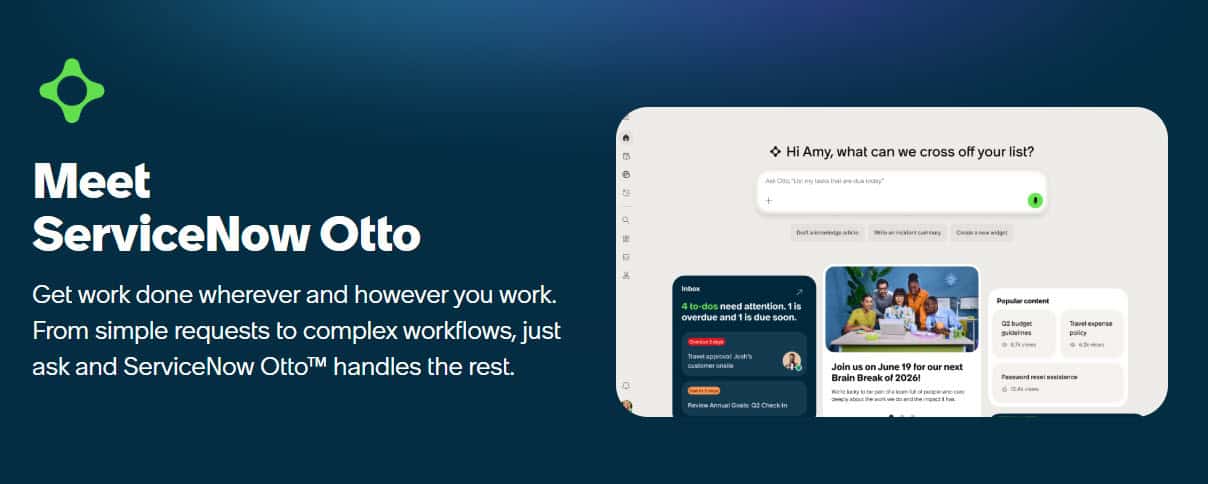 |
The reality is that Moveworks and Sana have a lot in common, and branding Otto as a persona helps position it as a friendly employee tool for search, knowledge management, or any other employee need.
(Note: Sana is far more advanced in its learning capabilities, just in case you’re comparing the two.)
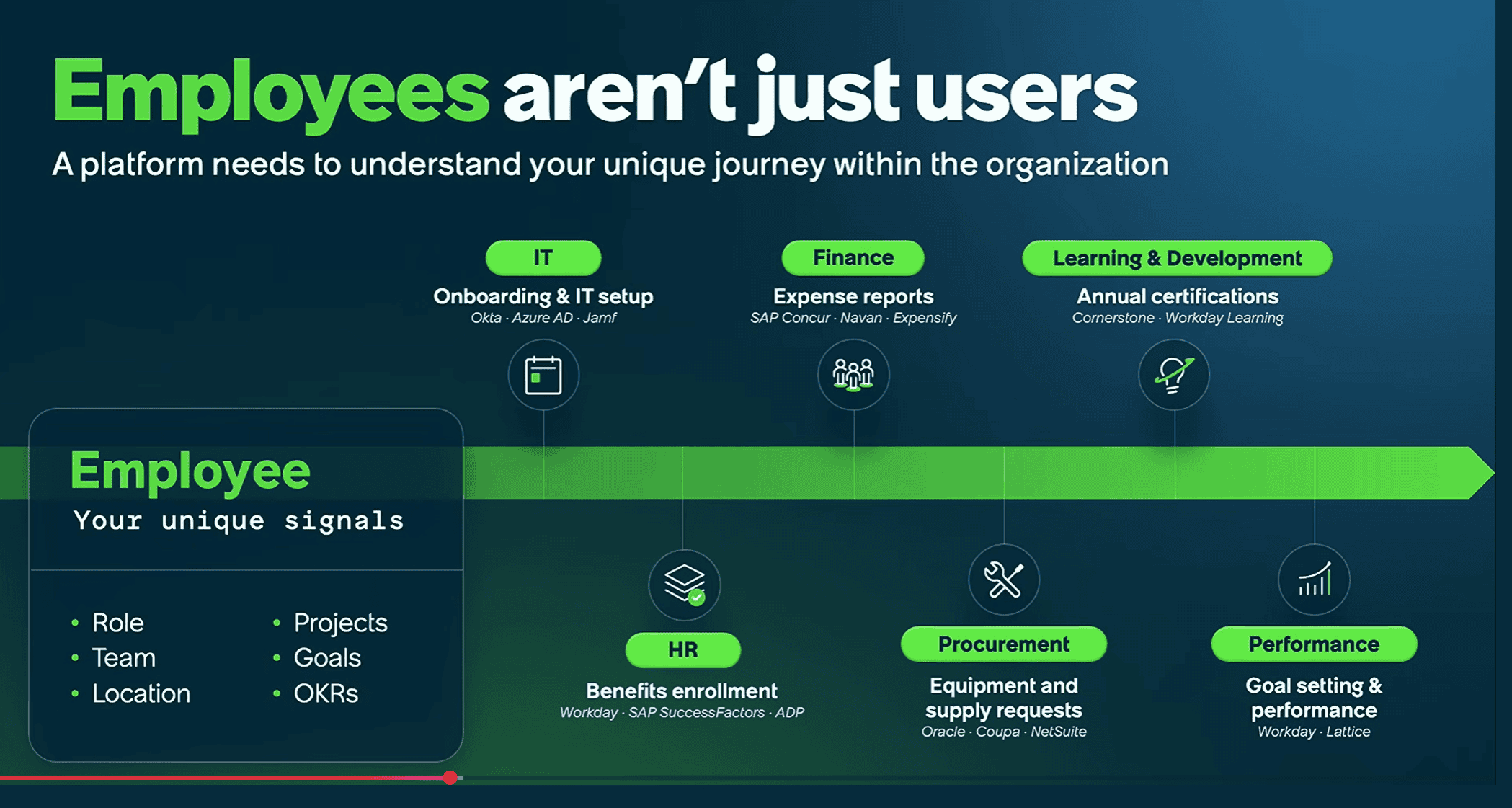
And interestingly enough, ServiceNow positions Otto as the new Employee Experience.
 |
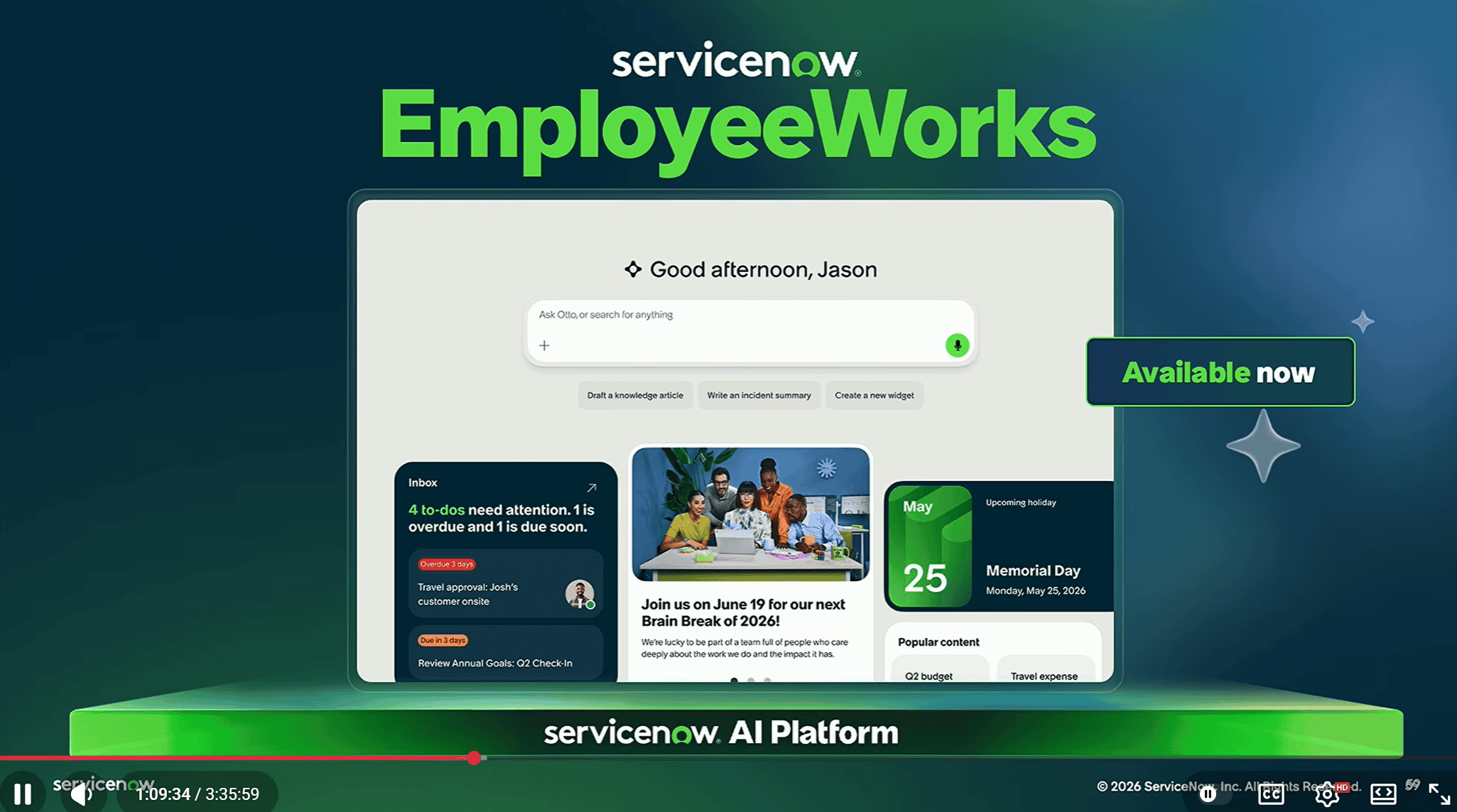
Note that Bhavin Shah (Moveworks founder) now runs Otto, and to promote its open nature they brand ita EmployeeWorks.
In other words, say goodbye to “Employee Self Service” and say hello to Otto, the employee’s friend.
 |
Quick comment. I’ve watched the “Employee Experience Platform” market evolve for years, and this is tougher than it looks. Every employee need is connected to many other things, so while it may look like a chatbot to ask about vacation policy or benefits, you quickly realize it has to also deal with a wide range of inquiries. Some EX platforms provide communications, communities, training, surveys, and a place for various IT, policy, and general employee problems. So Otto will need a lot of integrations with other things.
Just to give you a simple example: we are working with Microsoft on an employee agent for crisis management. That custom agent has to deal with employees in Ukraine who suffer family trauma, power outages, and other emergencies. When the war in Iran began it found new use-cases again. These kinds of broad support and services tools may or may not be AI-first, so Otto will get a lot of potential scenarios.
With Microsoft, Zoom, all the HCM players, and many others focused here, this is a highly competitive space. Others tend to call this the “Employee Self-Service Agent” which I always felt was a backwards-looking name. 🙂
Upgrade to the AI Control Tower to “discover, observe, govern, and secure enterprise AI: how it’s working, where it’s adding value, and where it’s hallucinating.”
The vision for AI Control Tower is expansive: it doesn’t only monitor and provision agents, it tries to compute their ROI, which is interesting. Presumably you could spot an agent that’s misbehaving as well as one that has gone into cost-overload by consuming too many tokens.
Not to date myself, but the vision sounds like something IBM launched years ago called “SystemView” that tried to manage every computing resource in the proprietary IBM SNA network. It sold like hotcakes.
When you listen to Bill McDermott explain, he describes companies as a sprawl of conflicting workflows and business rules which nobody fully understands. His vision is to manage every identity: all the agents, the workflows, and the people. Bold, yes. Reasonable? Time will tell. As they say, sell the sizzle, not the steak. (and remember, the meter is running!)
I would also remind you that people are not workflows or Agents. In all our uncertain decisions, we often do “what we think is best.” The Ritz Carlton created a brand about empowering employees to “use their own best judgement.” The idea of “monitoring and managing every decision” sounds great to IT, but let’s not take it too far.
But there’s more.
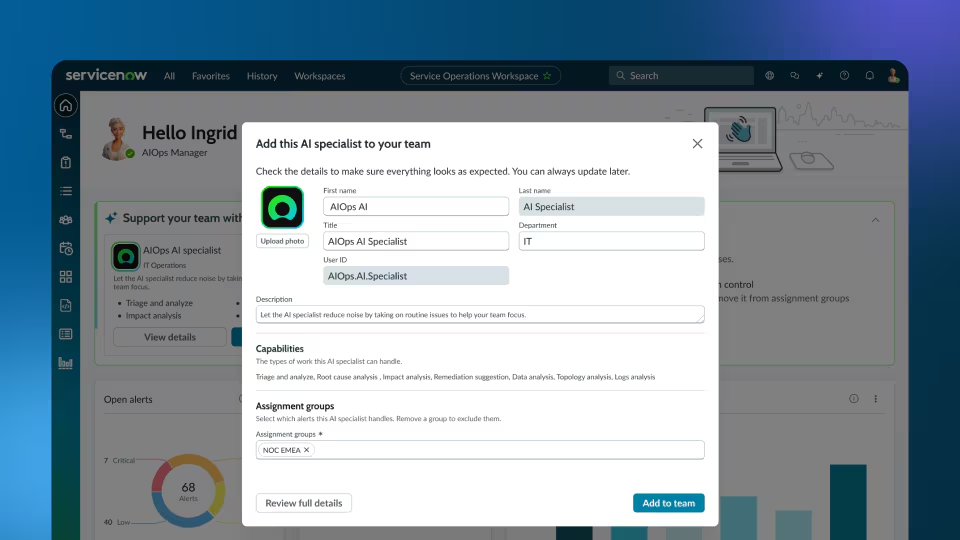
ServiceNow introduces “The ServiceNow Autonomous Workforce,” a set of predefined “AI Specialists” ready to be trained to do autonomous work.
The vision here is excellent, very similar to what we’re building in HR 2030. ServiceNow is starting to define the potential job roles for Agents.
These include roles like Site Reliability AI Specialist, AI operations Specialist, Level 1 Service Desk Specialist, HR Service Delivery AI Specialist, Case Management Specialist, Third-party Screening Specialist, and even roles like Enterprise Architecture Specialist and Vulnerability Exposure Specialist.
In our HR 2030 Blueprint we define three types of agents: those which take action, those which set rules, and those which observe and monitor.
So we would add a “DEI analysis and compliance specialist” and an “Employee engagement monitor” or a “Manager approval agent” and even a “Pay equity advocate,” for example. These are jobs that may have been owned by one or more people that can now be centralized in a data-hungry, hard-working AI agent.
Companies aren’t doing a good job of “naming” their agents yet, so ServiceNow took a start. In fact I wouldn’t be surprised if our AI agents name themselves, they know what they’re good at!
We spent several years refining Galileo’s power as a “digital HR consultant” and most companies are just beginning to understand the implication on their org chart. (By the way, Galileo is an integrated add-on feature of Otto.)
And Introducing the ServiceNow Context Engine, a context layer that identifies and locates existing system business rules and metadata, to see the enterprise operations in one place.
Theoretically this would include organization structure, privacy rules, and various business workflows, many coming from ERP or other systems..
They claim this platform “grows smarter about how a business works with each action,” a bold and interesting direction. They call it a “graph of graphs,” bringing together their workflow data network (for data integration) into a massive graph: knowledge, action, asset, and decision graphs. They also introduced “autonomous data analytics,” an AI Analyst Specialist, to keep the data integrated.
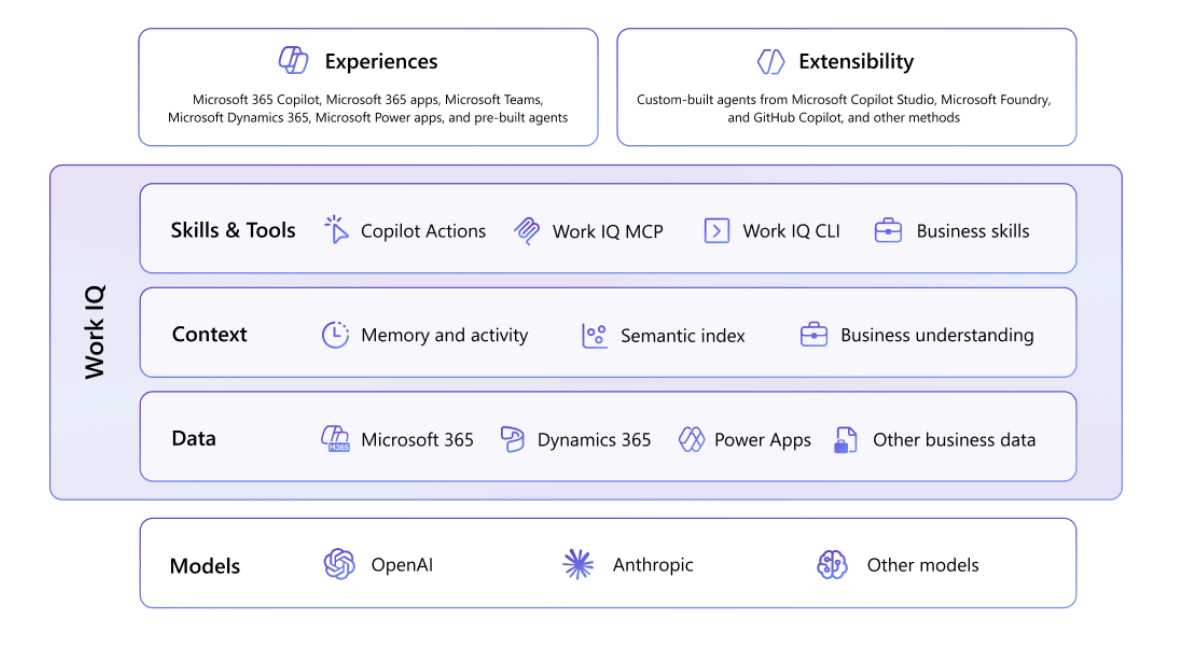
Again this is a competitive space. Microsoft WorkIQ is positioned precisely this way as well, and Microsoft Copilot already has comprehensive connectors to the Microsoft Graph. WorkIQ goes beyond the graph and its API is being released this summer. And Gloat just introduced Loomra which does this for human capital applications.
 |
A Big Vision With Lots of New Revenue
This is a big vision, and it reminds me of my IBM days when we launched “The Office of the Future,” which dazzled our customers with demos but largely consisted of new copiers and word processors.
Big, bold IT companies can paint a vision which solves big problems, and this appeals to IT departments in any era. You sell the fear of data breaches or renegade agents, and that appeals to IT.
A live demo shows a prompt injection attack on a Pricing Agent — a malicious instruction embedded across 1,847 requests in a two-hour window, designed to manipulate shipping prices. The AI Control Tower detected it, traced it, recommended a kill switch, and neutralized the agent, all autonomously, pulling signals from Veza, Armis, Cisco AI Defense, and CrowdStrike.
Who wouldn’t pay to avoid that?
Does This Business Case Work?
Everyone will agree we enterprise tools to manage our AI Agents. But as the market is young, how much will IT spend to create infrastructure in advance of applications?
There’s an interesting economic argument here. If you’re buying AI to replace labor, you’re replacing payroll spend on AI token fees. If the AI agents aren’t doing more, this new spend may not pay off. (Note Uber’s decision to pull back on software agents because humans are cheaper.)
Remember that the goal is not to “automate work” but to “transform work.” So before you pay for all the security layers, I just suggest you start your transformation and redesign first. I do talk with lots of ServiceNow customers who licensed software they don’t yet use.
And also note that the development tools do matter. If it’s easier to build Agents in Workday or Microsoft Copilot, companies may prefer those vendors’ management tools as well. So the “total cost of AI transformation” is cost of building a groundbreaking app, and that includes development, maintenance, business rules, and governance.
ServiceNow Is Defining A New Revenue Model for Software
Enterprise AI is looking like a trillion dollar opportunity for software companies, just monetized through Agent usage not per-seat fees. ServiceNow, Workday, Oracle, and SAP all get this.
And to accelerate this work, this week Anthropic teamed up with Blackstone to build a new services company for integrated AI products and services. Then OpenAI then launched its own joint venture services business with $4 billion+ from PE firms to staff up.
The new idea is that “software is a service,” and that fee-driven service replaces a massive market of human work.
Nevertheless, I remind you of the story of The Ritz Carlton. At the point of need, where a customer or employee has a vexing problem, we want people to “use their best judgement” to address the issue.
Maybe this is where AI eventually goes.
AI Agents don’t replace us, the liberate us to think bigger and more clearly as humans. Only time will tell.
Stay tuned for my new book on this topic coming in the Fall, with previews available to everyone who comes to Irresistible 2026. It’s June 8-10 at USC, and we have lots more to share.
Additional Information (Note that all our research and podcasts are at your fingertips in Galileo)
The Reinvention of Workday: From System of Record to Platform of Agents
Could Microsoft Win The War For Enterprise AI?
The AI vs. Labor Economy, Why Benefits Are Being Cut, The Role of Legacy Systems
The Context Layer (Semantic Layer) In Enterprise AI (And Where Business Rules Go)