The World of Corporate Training Lurches Toward Enablement
We recently published our new Definitive Guide to Corporate Learning and defined a new role for L&D: Dynamic Enablement. In this role the training teams move beyond education and credentialization and use the expertise in their libraries (and from experts) to deliver “dynamic enablement” to employees in the flow of work.
I used to call this “learning in the flow of work” but it’s more: enablement may be answering a question, digging into a topic, finding an expert, or perhaps learning something new. We use our peers, manages, and experts to “enable us” all throughout the day.
 |
Well within only a few weeks of launching this massive study we’re seeing dozens of vendors “lurch” (jump) in this direction. Why? Because it’s a massive market need and AI makes it easier than ever.
How Do You Deliver an Enablement Experience?
Before I talk about vendors, let’s briefly discuss what this is. When an employee needs help, there are many paradigms to consider.
- Is this a help button? In traditional software you open a “Help” button and browse through articles or a knowledge base. Kind of works but it’s slow and not personalized
- Is this an “ask Sally” window? In chatbot world, you “ask the support bot” and it frustratingly tries to understand your question, usually wasting your time. (Try “asking” for help in paypal, I dare you!)
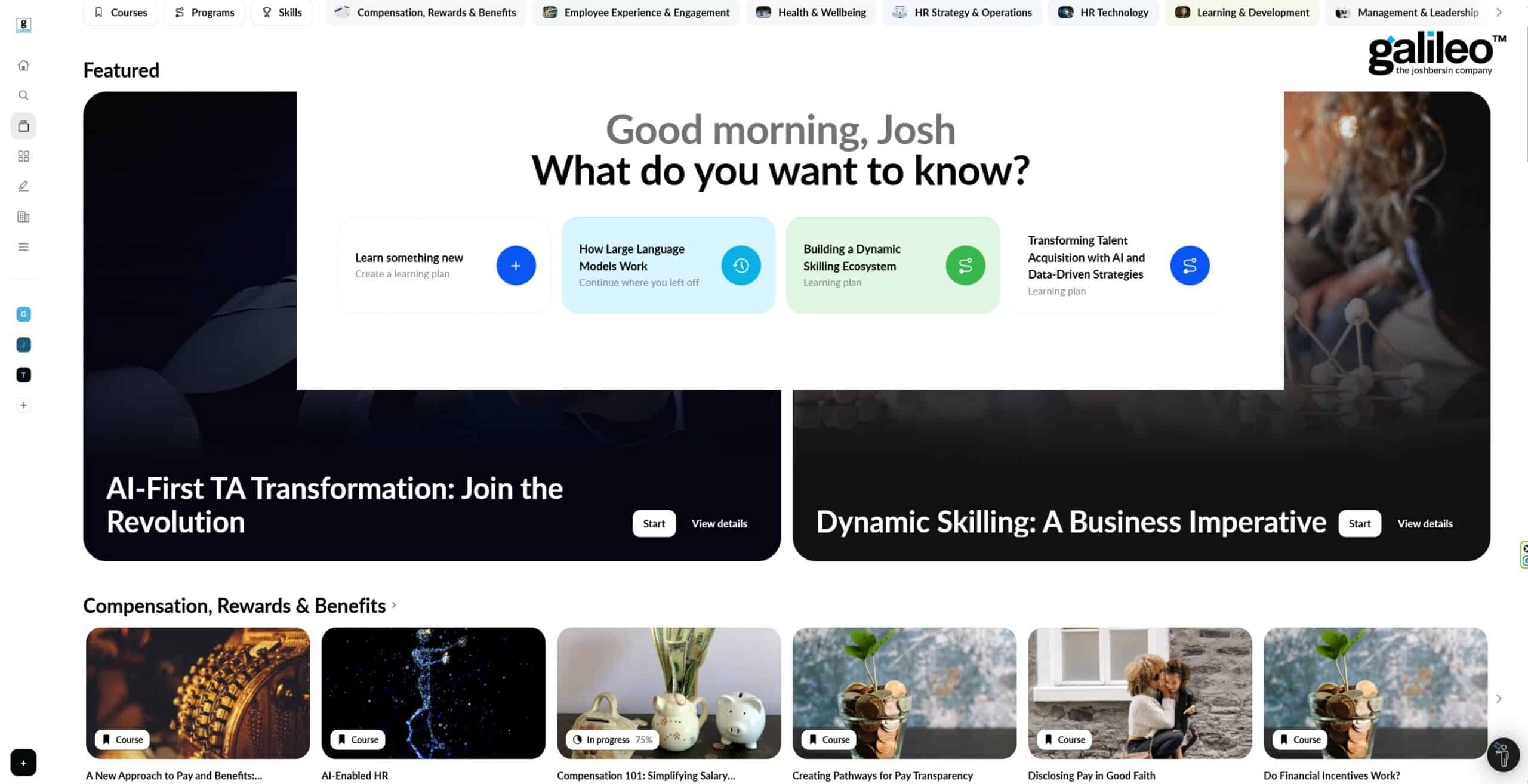
- Is this a conversational agent? What if the chatbot spoke to you and you could interrupt it and get to the point? Galileo does this today and we’re experimenting with an implementation like this for all our clients. It’s like tapping a person on the shoulder, and this person knows “everything.”
- Is this a coach or advisor? What if the agent asked you questions? Would that just irritate you or would you consider it value add? (I don’t like being interrogated when I’m searching unless the question is a quick way for me to better get to the answer.) A “learning coach” may or may not help.
- Is this a digital twin? Now take that same shoulder-tap, but make it specific. Instead of tapping into enterprise intelligence broadly, you tap the exact person who knows an answer (or even a digital version of yourself). Digital twins use AI to capture and replicate the expertise of your top performers, departing employees, or subject matter experts, making their tacit knowledge instantly available. We use Viven (our digital twin platform) to aggregate knowledge from emails, recordings, meetings, and work artifacts, giving us access to any expert even if they’re fast asleep.
- Is this a performance support tool? We used to have things we called “performance support” (WalkMe, Infopak, others) which watched your use of a system and gave you tips and advice while you interact.
- Is this a “learning agent?” In Galileo Learn the Superagent remembers who you are and what you’ve done, but it’s not attached to your production system. It offers answers, advice, and examples in a pinpointed way and you can talk to it. Is that what people want, manifested into your operational environment?
- Is this a microlearning tool? In Arist and Axonify the system delivers small chunks of learning to your phone or device (more on Arist’s launch below), is that what you need? For safety and compliance (ie. machine operators, Uber drivers) this may be the best.
The answer, of course, is “all of the above.” Enabling an Uber driver is very different from enabling a middle manager, software engineer, sales rep, or manufacturing worker. So our job in HR (and L&D) is to fit the “enablement platform” into the use-cases we need.
Now this is such a new, hot space the vendors are moving at a frenzied pace. That’s why I call this a “lurching” moment, you’re going to find many interesting solutions but I advise you check them out before you get totally enamored with one.
Here are some of the latest.
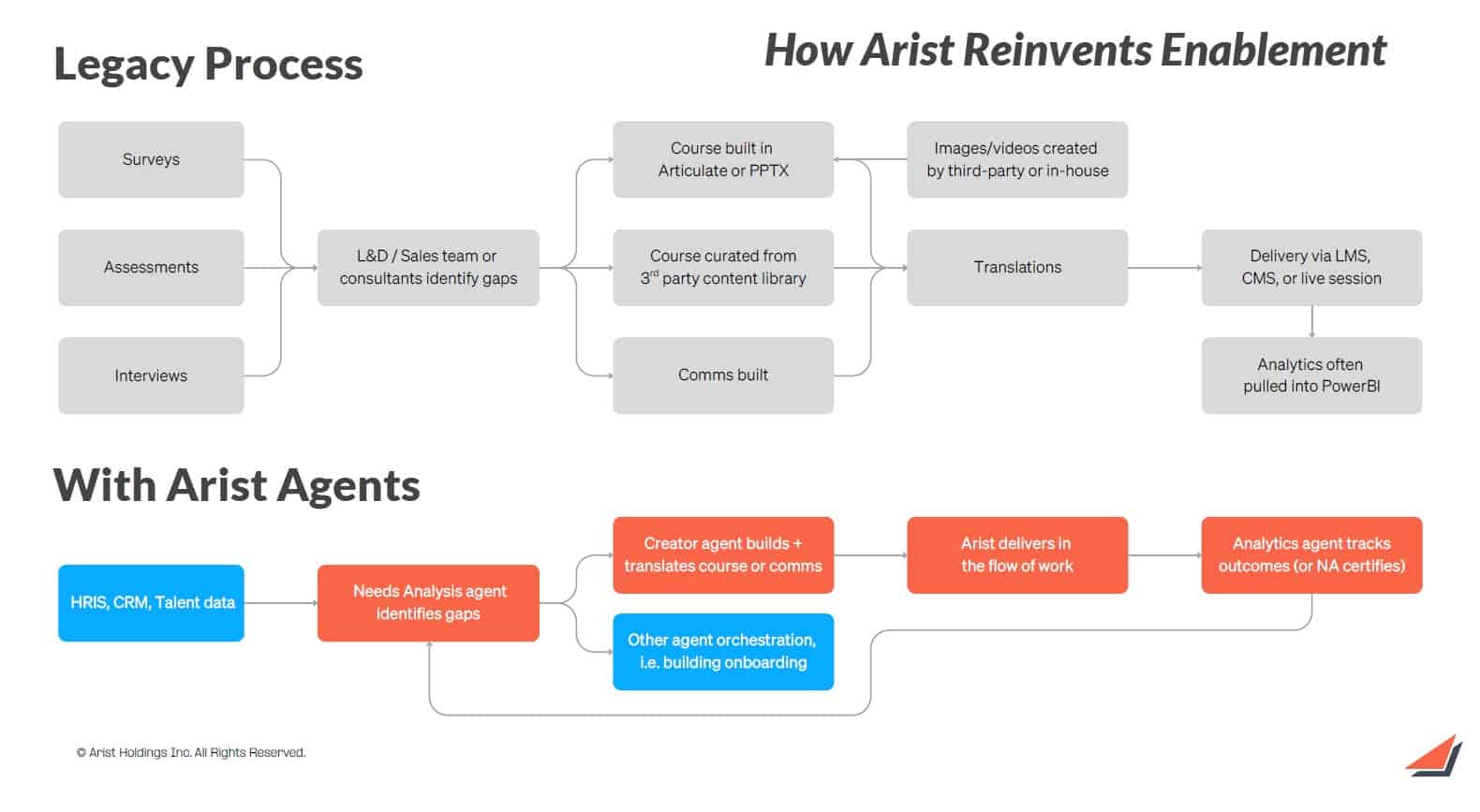
Arist is an impressive new company (we partner with Arist on many of our HR training and enablement programs) which began as a mobile-first enablement platform. Not only does it dynamically generate content (very well), it can chunk up complex training (ie. pharmaceutical sales topics, regulatory training, tech training) and deliver it to your phone. The founders are three of the most creative technologists I’ve met and they’ve moved rapidly into the end-to-end enablement market.
For example, Arist now goes well beyond dynamic content development and delivery and offers an “AI Performance Consultant” that can interview operational staff, identify problems, and then turn around and build content to address the issues. This, to me, is the first big step toward “autonomous corporate learning,” where the agent finds problems and solves them like a self-driving car.
We’ve been using Arist for a few years and they’re well worth checking out.
 |
Sana, now owned by Workday, is the most advanced AI native platform we’ve seen. Sana was founded in 2016 by Joel Hellermark (I believe he was a teenager) with the goal of revolutionizing how people learn. Sana used AI from the beginning (actually used OpenAI tech long before ChatGPT was launched) and quickly moved into corporate training in the early years.
As a result of Sana’s deep AI core the company built an end-to-end learning platform (you can see, use, and experience Sana with Galileo on a per-user basis) and then launched an AI Agent platform called Sana Agent. The two systems now work together and the Agent is essentially a dynamic learning, knowledge, and AI agent development platform. Workday will soon launch Sana Enterprise which lets you use Sana Agent to directly access Workday data and transactions. It’s clearly a dynamic enablement platform.
 |
Seismic (sales enablement):
Seismic is one of the leaders in a massive market: sales enablement. Most companies have teams of people creating pricing guides, product launches, videos, and tools for sales teams. (Sales teams have to know product updates, contracts, pricing, competition, as well as how to sell). This space alone is a $4-6 Billion space and growing at double digit rates.
Seismic is the leader but many others (Allego, Mindtickle, Highspot, Showpad) play in this space. (I’m really amazed that Salesforce has not gotten into this, with all their Agentforce stuff.) Arist also plays here, so you have many options to consider.
Docebo (next gen LMS):
Docebo, one of the only publicly traded LMS companies, has aggressively moved into AI-native learning and enablement. In the last few years Docebo has launched AI tutors, AI native authoring, and templatized AI assessment, all built to compliment it’s large business in revenue-generating training and corporate L&D.
In the last month Docebo acquired 365 Talents and now offers a complete AI-driven skills intelligence system (Sana does this and others do as well). so you can identify skills within content and build a corporate wide skills taxonomy and deploy learning aligned to skills needs. SNCF, Airbus, and other big European companies use it and this is, in effect, one sub-market for enablement.
(ie. “I need to learn more about XYZ, what do I need to know?”)
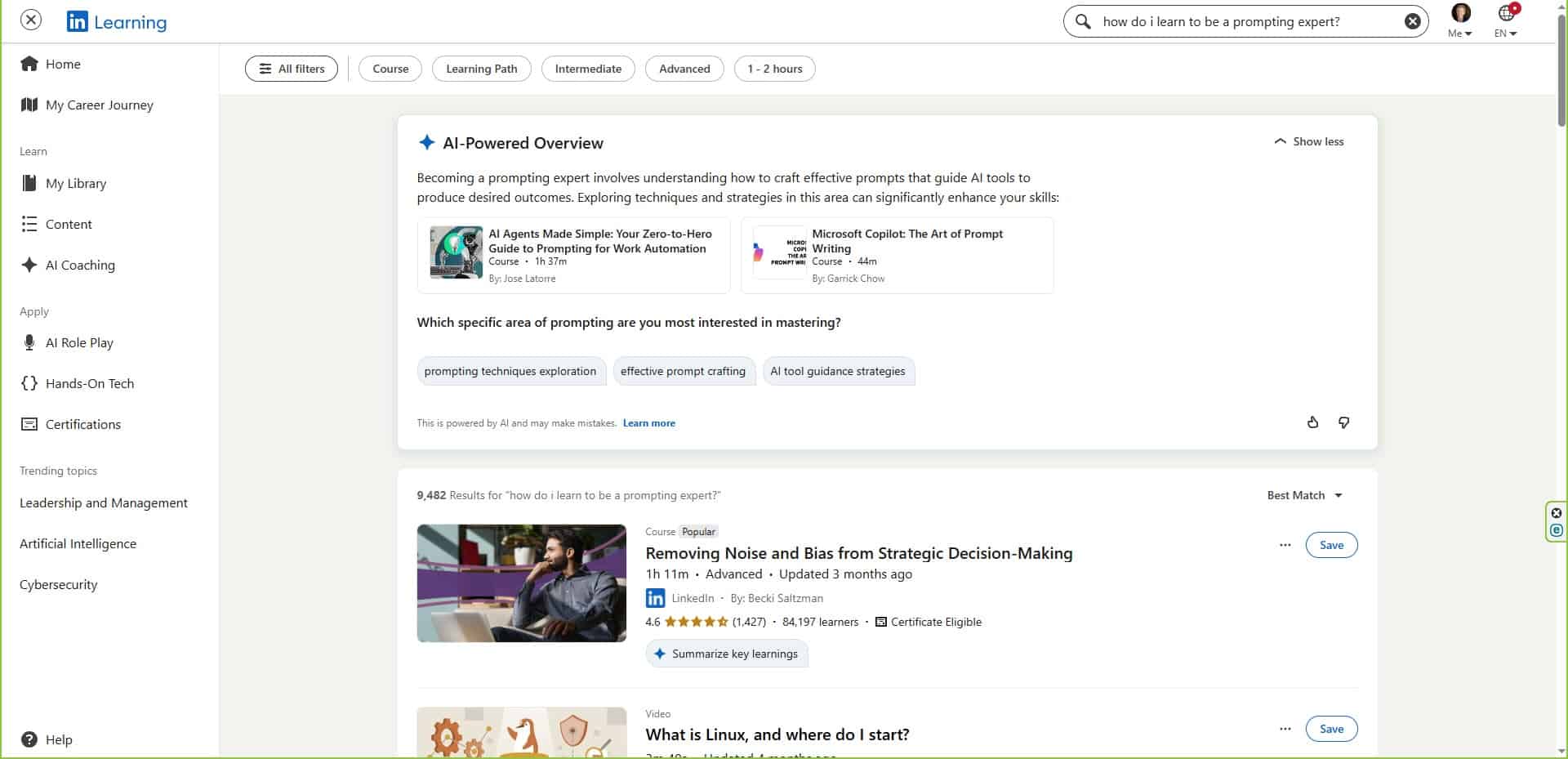
LinkedIn has become a “safe buy” for L&D leaders and is now one of the largest corporate content companies. Recently the company launched LinkedIn Learning AI Coaching, a flagship new system that gives you a “coach” to help you learn.
As you can see from the image below this lets you find content and then start an AI Role Play to help you practice, interact, and build confidence. I’d call this a “heavy touch” to enablement but it’s a huge use case for leaders, new managers, sales people, and people new to a domain. So they’re now playing in the “Dynamic Enablement” space little by little, albeit not as customizable as some of the others.
 |
Uplimit is the performance support AI that L&D tech stacks are missing. They get what learning scientists have been saying for decades: learning styles (auditory, visual) are a myth. People have preferences, sure. But just because someone enjoys a video doesn’t mean they’ll retain it (let alone apply it). We learn by doing, by practicing.
So Uplimit has focused on technical and sales training, where skills are built around practice, not passive content. It guides learners through real-world projects and AI-powered roleplays, delivering personalized feedback at scale. Learners build skills by doing work, getting feedback, and iterating. (ie. “I need to get better at customer discovery conversations” leads to AI-powered roleplay scenarios with real-time coaching.) And instructors or experts can grade exercises and support thousands of learners through its AI.
For L&D teams running cohort-based programs, Uplimit creates personalized coaching at scale: communication, scheduling, just-in-time support—without scaling headcount. The platform is widely used by fast-growing companies like Databricks, for example.
Degreed, which pioneered the LXP space, has championed performance enablement for years. Now they’ve added AI-native content generation to the platform, and it’s quite extensive.
Their next-generation platform Maestro Studio lets L&D and sales enablement teams build custom AI-based experiences (coaches, simulations, role-plays) without having to ship new courses every time something changes.
If you already have Degreed pathways, Maestro acts as a contextual coach and tutor: it reads the learner’s skill profile, past learning, and pathway progress, then provides targeted suggestions and feedback inside that pathway. They’re adding adaptive assessments and coaching as well, so an employee in a pathway now gets a real-time coach.
Perceptyx, a leader in employee engagement surveys, just acquired Lyceum, a company that builds AI tutors from content. Here the idea is to give employees (or leaders) a dynamic enablement tool to help them deal with employee issues.
Suppose you’re a manager and the engagement survey shows that you’re micro-managing your team. With Lyceum integrated into Perceptyx, the data from the survey could immediately inform your coaching needs. You could ask the agent “what could I do better” and it could tap into the company’s leadership content and coach you to a new level of leadership.
(The employee experience and survey market, dominated by Gallup, Towers, Glint, Qualtrics, CultureAmp, Peakon (Workday), Workvivo (Zoom), Perceptyx, and companies like Lattice, Achievers, 15Five, Leapsome, and others, is collapsing into a new space. These traditional survey and portal based systems, which were designed to help employees give feedback and recognition, are all going to become front-doors to enablement. The big question is whether you use an L&D platform like Sana or the ones above for content or whether you also build content in these systems.)
Disprz is an AI-native learning platform offering end-to-end solutions for onboarding, performance enablement, upskilling, reskilling, mobility, and compliance training. The platform is built with an impact-first mindset—meaning everything ties back to business outcomes, not just learning completion.
What sets Disprz apart is how they combine dynamic content development with analytics and automated performance coaching. Disprz has strong traction in India, Southeast Asia, and the Middle East. They’re expanding in North America and Europe. Worth watching.
Cornerstone offers a suite of skills-based learning and talent products designed to build workforce agility—helping organizations sustain performance as work design and roles evolve. The platform elevates learning, development, and performance management through personalized, multidimensional experiences aligned to business and individual performance goals. Keep an eye out for new tools and features later this year, as Cornerstone Galaxy (its new skills-based talent and learning system) rolls out.
For many years Cornerstone has offered microlearning content, dynamic content development, job aids, preceptor training tools (validation), and an enormous network of partners that bring learning into the flow of work. A new upcoming release of Galaxy will bring AI-native learning as well.
(Watch for a major announcement from Cornerstone on AI-driven content soon!)
360Learning is a collaborative learning platform built around a simple but powerful idea: everyone is a teacher. The platform lets any expert—sales people, IT professionals, teachers, subject matter experts—author courses, share content, and share what they know without needing instructional design expertise.
When we speak to leaders of AI-first L&D teams, most were initially skeptical about letting subject matter experts build content. But once they make the leap, the same story plays out: the quality blows away expectations, organization agility increases, and performance goes up.
The market for knowledge sharing through democratized content authoring is expanding rapidly. In the past few years, many platforms have entered the space, often differentiating through industry-specific workflows,.
Another example is Syllog, which positions itself as a solution for rapid content authoring and personalized training programs for manufacturing, engineering, banking, insurance, and technology.
Frontline Enablement Market:
Many AI-native solutions support frontline enablement, but there’s an emerging, specialized market focused exclusively on this space.
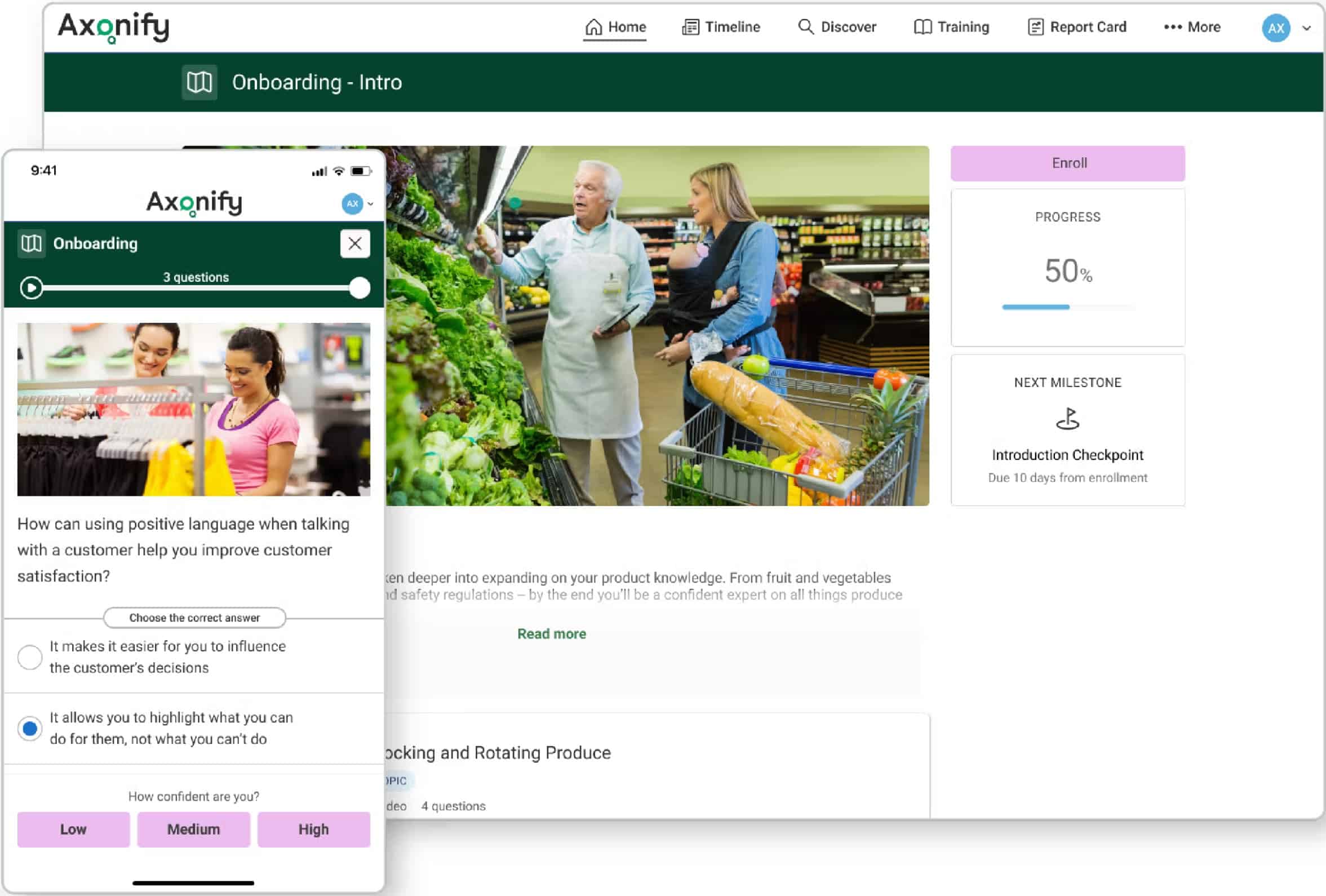
Axonify, a pioneer, is a frontline enablement platform that leverages brain science and AI to deliver training that adapts to each employee’s role and what they actually know—then reinforces critical behaviors through spaced repetition.
 |
Another pioneer, Kahuna focuses on operational training and in-depth skills validation.
The company is well known in oil and gas, energy, manufacturing, and distribution. This year, Kahuna became the first frontline skills management Workday Gold Innovation Partner, demonstrating how their platform enables workers to recertify and up-certify their skills.
Unique Enablement Providers
Alongside a growing frontline enablement market is the emergence of niche AI-powered enablement solutions with hyper-specific purpose.
IMMERSE is an AI-powered language fluency performance platform. We’ve all seen the “Limited Working Proficiency” status on the language section of LinkedIn profiles. What is “limited proficiency” based on? A high school course? A completion certificate? IMMERSE leverages AI and live enablement experiences to boost communication confidence across languages.
And it often goes well beyond learning. Chalhoub Group, a creator of luxury retail experiences in the Middle East, added Feedly to its AI-enabled L&D tech stack to translate external market signals into continuous, role-relevant brief learning moments. This steady stream of curated insight helps employees stay current and make better real-time decisions.
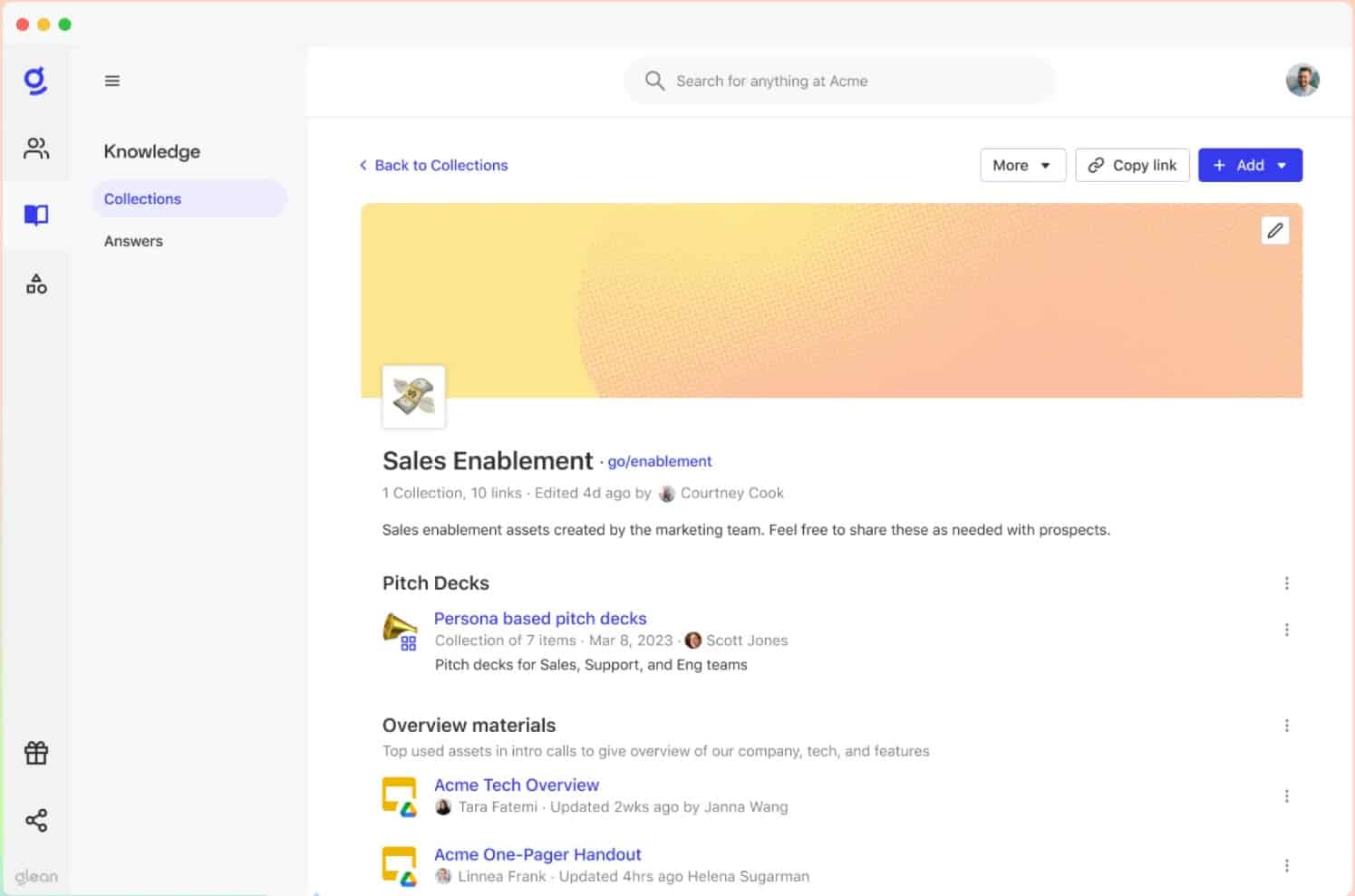
And finally let me mention Glean, a company we follow closely. Glean started life as an AI-powered search engine and now brings real-time content discovery and access through MS Teams, Slack, and other agents. In some ways Glean can be the ultimate enablement platform, although it positions itself as a “work platform.”
 |
Where Is All This Going?
The reason I used the word “lurching” is because every HR-related platform has its own “dynamic enablement” opportunity. Building an AI-native content generation system has gotten easier and easier, so the direction is now toward use-case specific solutions. (Dynamic enablement of an Uber driver is quite different from that of a software engineer, who may want Github or Atlassian to do this.)
In other words, the traditional market categories of LMS (Learning Management System), LXP (Learning Experience Platform), Microlearning (Frontline enablement), and EXP (Employee Experience Platform) are collapsing.
If you use Microsoft Viva, for example, to consolidate your HR portals, you now realize it’s “old school” and you’d like people to just use the MS Copilot. Ditto every other platform in the market.
Dynamic Enablement brings together expert and validated content (your own company’s IP), external experts (courses and providers), and crafted experience design that meets the needs of your employee roles.
In the new world of enterprise AI, where you are a “builder” not just a “buyer,” it’s time to look at this space carefully and experiment with these solutions.
Galileo is well trained on this market, so you can ask Galileo to help – or call us if you’d like to sort out this amazing new market.
Additional Information
The Enterprise Learning Tech Market Quickly Transforms Around AI
The Definitive Guide to Corporate Learning: Reinvention in the Age of AI
2026 Imperatives for Enterprise AI: The Road Ahead
The Great Reinvention of Human Resources Has Begun
Get Galileo, The AI Agent for Everything HR