The World Is Accelerating: What Has Changed About Leadership?
It’s a tumultuous time to be a leader. From the acceleration of AI to the change in global politics, I think it’s worth asking: *What has changed about leadership?*
Over the years, I’ve read hundreds of books on leadership and it feels like trendy topic. From the foundational teachings of Peter Drucker to the command and control era of Jack Welch, to the servant leadership of Howard Schultz to the first-principles leadership of Elon Musk, we can always find a new leader to emulate. What’s the model for today?
While all leaders have to set direction, define mission, and align people, the behavioral rules are changing. Let me give you our perspectives, particularly informed by our new Supermanager research.
1. Leading a “Voluntary Army.”
The most significant change in the last 50 years is what I call the “decoupling” of the employee from the organization. In the past, leaders could tell people what to do, and for the most part, they did it. This “boss-subordinate” dynamic goes back to the industrial age, so it’s ingrained into our companies and our HR practices.
I really believe that era is over.
Today, we lead “voluntary armies.”
Employees, contingent workers, and AI-powered Superworkers have their own sets of needs, opportunities, and issues. They don’t just “sign up”; they “opt in” every day. This means that the traditional levers of power—authority and hierarchy have been replaced by something more fragile and intangible: Trust.
How do you build trust? By clarifying the mission, empowering and developing people, and listening to new ideas. In a world where skills are highly specialized we all have individuals who could outperform or outthink our leaders. Why would we not empower them and let them tell us what they think we should do?
This “decoupling” has been going on for 50 years, and today, fueled by AI, it’s reaching a new level. One engineer or savvy professional could reinvent your business, so leaders must listen, engage, and empower everyone.
2. A Shift from Perfection to Iteration.
The second shift is from “do it well” to “do it now.”
All over our companies we’re dealing with AI technology that is new, powerful, and non-deterministic (ie. unpredictable). Leaders have been told that if they don’t get with the AI trend their jobs and companies will go away. So the natural tendency is to try to “figure it out and do it right.”
Well, as I’ve seen in recent meetings with organizations like IBM, Standard Chartered, Mastercard, and others, the quest for a “perfect” solution is a recipe for failure. And waiting for others creates a new level of risk.
In the industrial age, we waited for the 1.0 version to be flawless before launch. In the AI age leaders must become comfortable with imperfection. IBM, for example, replaced Workday with SuccessFactors in 18 months, knowing full well it wouldn’t be perfect. Microsoft is deploying Copilot agents in HR around the world, even as they discover dozens of use-cases yet to be explored. The world of “waiting until it’s done” simply doesn’t work any more.
Leaders must understand that “point A to point B” is not a straight line; it’s a series of iterations, mistakes, and improvements. Their role is to keep the organization focused on the problem or customer need while allowing the team to fail and learn.
3. A Refocus on Trust, Ethics, and Inclusion.
The third change is a refocus on values, ethics, and morality.
The press is filled with fallout from the Epstein files and political fighting. Lieing (“alternative facts”) are now common (often fueled by AI), and it’s getting harder to identify the real truth.
Leaders have to fight against this trend.
Why? Because most people have an inbred ethical foundation. They want to trust the company they join.
When a leader bends the rules or treats people unfairly, it doesn’t just create legal risk—it crushes human spirit.
And as I discuss in Irresistible, that unquenchable power of the human spirit is the greatest business secret of all.
The Plummeting Trust in Institutions
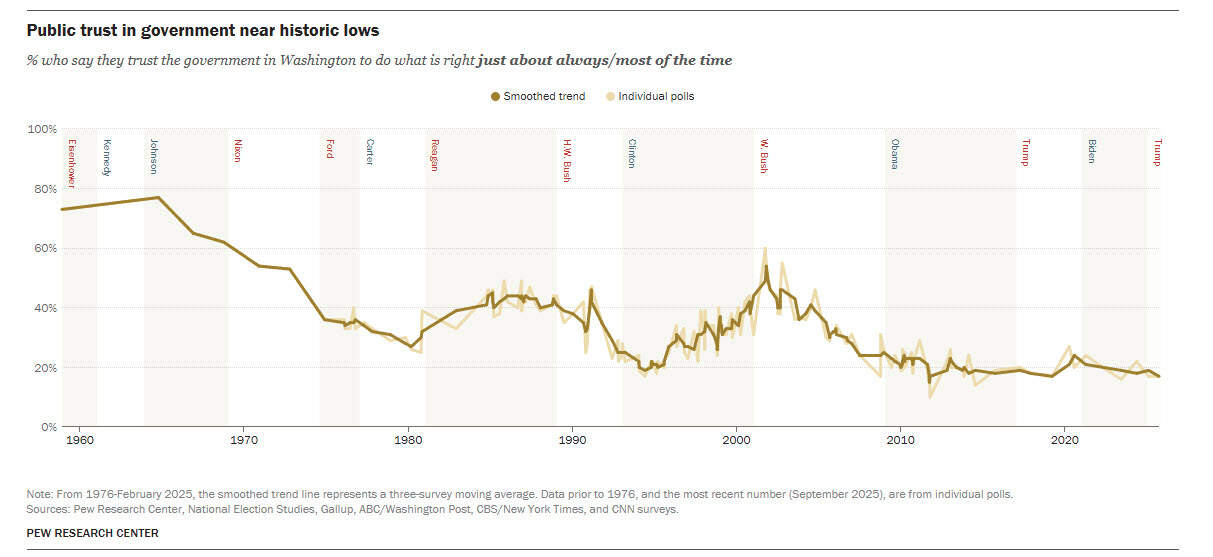
We live in a complicated time. In the US, we’ve seen a catastrophic drop in trust. (While 80% of Americans trusted our government in the 1960s, only 17% do today.) Leaders must fill this gap.
 |
How do we do this?
By listening to our people and staying focused on values and common sense. Speaking truth to power, taking a position on important issues, and listening to others is back in vogue (despite the demonization of DEI). These are values leaders must embrace.
Developing Leaders Is More Important than Ever
The bottom line is this: revisit your leadership model.
Your organization’s ability to adapt is highly dependent on leadership. Leaders who drive change, create energy, and maintain values are the most important assets you have.
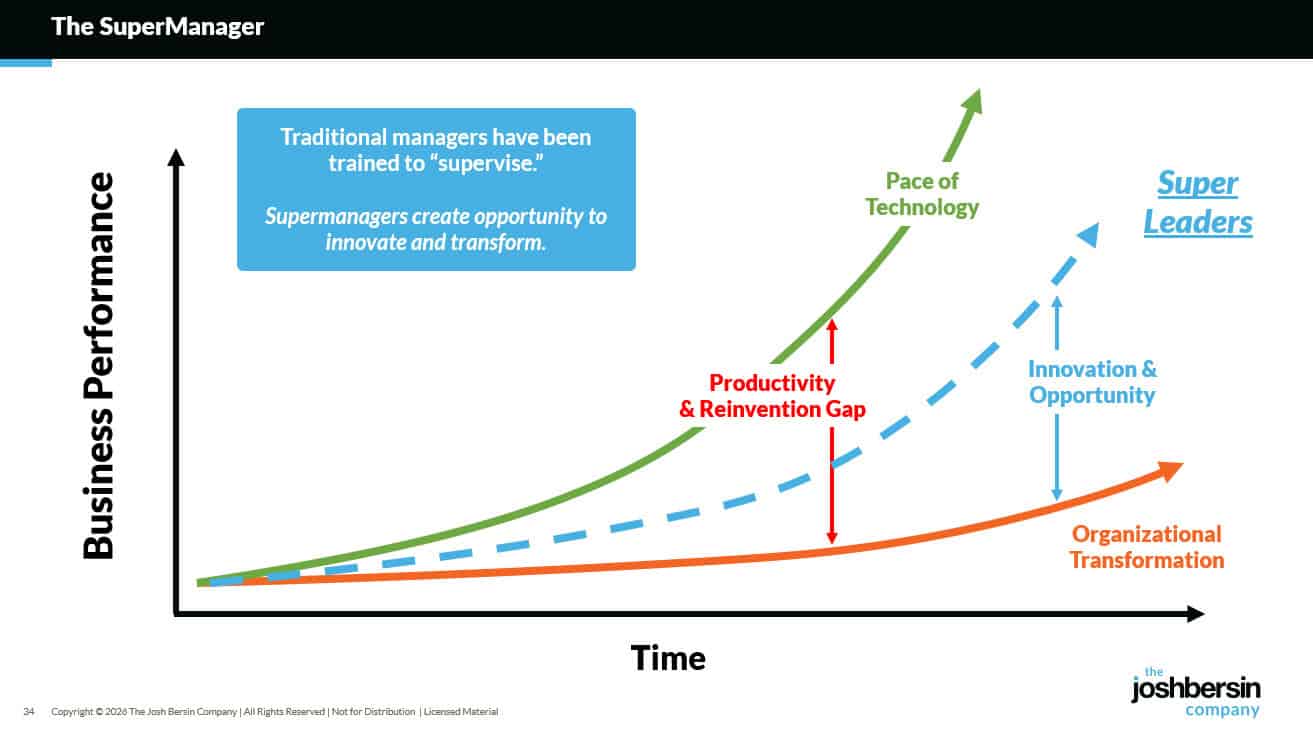 |
For more on this topic, read our research on “The Rise of the Supermanager” or ask Galileo to assess your organization’s leadership capabilities.
Galileo has been trained on more than 30 years of research, 700 case studies and industry examples in leadership, so it can personalize your own leadership journey. And Galileo Learn is the world’s AI leadership academy, ready to train you and your team on leading in the age of AI.
Come to our annual research conference Irresistible 2026 (June 8-10 at USC) for the launch of a major new leadership offering I know you’ll love!
Additional Information
Galileo for Managers: Leadership Coach at your Fingertips
The Definitive Guide to Leadership Development: Irresistible Leadership
Irresistible: The Seven Secrets of the World’s Most Enduring, Employee-Focused Organizations